Saturday, March 29, 2008
Our story continued...
Do you remember the house that we purchased in 2002, that we talked about in a previous post? Well, we ended up spending way too much on that house in repairs, and to cash out my partner, I ended up getting an LOC on that house for 80% LTV. Remember the terms that we talked about before? If you do not understand the last statement, then you need to study much more if you have your heart set on buying real estate. Anyway, to explain to those who do not understand, an LOC is an acronym standing for Line Of Credit, and LTV stands for Loan To Value. We then cashed out our partner in that deal, and rented the house out. Now, 6 years later, the house is worth about $55K, and we have a $35K LOC on it. So, if I wanted to sell, I would be able to sell it and make money on it. However, the rental amount is more than paying the payment, and we have $200.00 (after expenses) coming in besides. Now, with a LOC, or a HELOC, the credit reporting companies count those as revolving credit. If you have any revolving credit maxed out, that will be counted against you, and will affect your credit score. That has happened to us in the years since we purchased our first house. More later.


Friday, March 28, 2008
terms and info
Last time, we talked about repairs and knowledge of repairs, but this time, we will talk about knowledge only. If you are planning on making money in the real estate market, have you taken the time to learn as much as you possibly can about the industry? Whenever you start a new endeavour, you have to learn as much as you can about the subject(s) that you are interested in. Real estate is no exception! There is much to know! Let's talk about terminology. Look over the list below. How many of the terms do you actually understand? If you are unsure of 3 out of the 30, then do all that you can to learn more about those 3. If you have over 3 , then you need to learn more, so that you are not out-on-a-limb when you buy, or don't have the confidence to start the process at all! It is not necessary to buy an expensive course study to learn about this process! Just set your mind to learning more about this subject, and the knowledge will come. Knowledge builds confidence!
HUD1, 1031 Exchange, amortization schedule
seller's disclosure, agreement of sale, lease purchase
hard money, soft money, non-conforming
bank foreclosures, sheriff sale, mortgagee
seller-held second, short sale, title insurance
subordination, real property, prepayment penalty
acquisition costs, balloon, points
ARM, buydown, blanket
chain of title, lender, debt-to-income
HELOC, liens, truth-in-lending
This is just a partial list of terms that you should know about. Feel free to email me if you need more information. I will do my best to point you in the right direction.
Thursday, March 20, 2008
You know, the "experts" tell you to hire someone knowledgeable to do the repairs quickly and efficiently, however, does that really make sense? If you do not know how to do the repairs yourself, and how to shop for materials, then how do you know if the contractor is not taking you for a financial ride? He (or she) might tell you that you need something to "bring it up to code", but do you really need the item(s) or service(s) that person is telling you? Do they even know? The code book is so large and cumbersome, that even the code officials have not read it in it's entirety! Wouldn't you like to be informed in the whole process of buying, renovating, flipping, renting, maintaining, and selling? Wouldn't it be a much better idea to actually "know" the terminology, and the technical know-how of installation? Why not go to one of the big box stores, and get the information on how to install floors, ceilings, finish drywall, lay tile, carpet, and laminate? They generally have flyers that you can pick up, that will give you some of the basics of installation, and also the tools that you will need. Then, go back and price the materials, even if you are not going to do the installation yourself, at least you will be a little bit more knowledgeable when a service provider comes to you and submits an estimate for the job.
Tuesday, March 18, 2008
On that first house we learned a lot of really good lessons, but it was time to go on to house number 2! In 2002, we purchased another house at a foreclosure real estate auction in a hotel room in a local city. We had been in the property before we purchased it, and actually submitted an agreement of sale to the listing agent for the purchase of that home. At the time, we offered $16K for the home, to the listing office, and were rejected, when the "owner", the bank, decided to sell the house at public foreclosure auction, using a licensed auctioneer. We registered before we went to the auction, and bought the house for $13K, instead of the $16K that we offered originally. Now, after settlement, we all were the owners of a small 2 bedroom semi-detached home that needed a new roof, the basement dug out (it was a dirt floor), new windows, and a lot of cosmetics. My family and some industrious teenagers went into the home to haul dirt by the bucket load up the steps and into the backyard. After we had removed over a foot of dirt, we hauled down the steps bucket after bucket of sand so that we could lay brick on the floor. The brick, we hauled over from a barn about seven miles away that someone wanted out of their yard. Of course, that was all taken down the steps as well. Luckily, the basement was not a very large area, so that it only took 4 of us about 15 hours to complete. However, we certainly were exercising forgotten muscles hauling dirt, sand, and brick up and down numerous steps for a couple of hours at a time!
After we were finished with the basement, one of the investors in the club was going to repair the house for us. We have since learned, that for us to hire someone is a good idea, but usually not to pay someone by the hour! This investor was not making income from any other source except the small amount of work that he could get from the investors' club. Being a little bit green at that point, we did not analyze our costs as we should have, and ended up paying this man for numerous shopping trips to get supplies and materials, numerous smoke breaks, and lots of "I feel like talking to people" breaks as well. At that time, I learned more of the "language",(meaning my scraper was not a spatula, and the philip screwdriver was not a starpoint) and was in the process of learning how to do some of the repairs myself. I watched, listened, and learned a lot between then and now. I now can install any kind of floor myself, paint, install ceilings, doors, windows, cabinets, and much more! I know what people are looking for in the houses that they purchase from us. I now can shop at building materials auctions knowledgeably and with confidence, knowing what the prices of individual materials are.
After we were finished with the basement, one of the investors in the club was going to repair the house for us. We have since learned, that for us to hire someone is a good idea, but usually not to pay someone by the hour! This investor was not making income from any other source except the small amount of work that he could get from the investors' club. Being a little bit green at that point, we did not analyze our costs as we should have, and ended up paying this man for numerous shopping trips to get supplies and materials, numerous smoke breaks, and lots of "I feel like talking to people" breaks as well. At that time, I learned more of the "language",(meaning my scraper was not a spatula, and the philip screwdriver was not a starpoint) and was in the process of learning how to do some of the repairs myself. I watched, listened, and learned a lot between then and now. I now can install any kind of floor myself, paint, install ceilings, doors, windows, cabinets, and much more! I know what people are looking for in the houses that they purchase from us. I now can shop at building materials auctions knowledgeably and with confidence, knowing what the prices of individual materials are.
Monday, March 17, 2008
On this house, we spent money to have someone remodel the house for us. At the time, in our investors' group, we had quite a few individuals that bought houses and completely remodeled them without the help of a contractor. They operated completely hands-on. Is this better or worse to put all of the time into the building yourself? Is it better to save the labor costs, and spend huge amounts of time on the building? You be the judge! If you are buying houses in your area, and have experience fixing these houses up yourself, let me know what your thoughts are. We have other investors that are buying houses that are not in need of repair, and buying them directly from investors at a higher market value, and keeping these properties for rentals. For us, this is not our strategy, as we make more money from the repair of these properties. There are many ways to invest in real estate. You need to find the method that is right for you personally. I will tell you, we all learned a lot from each other, and from trial and error. Over the last 10 years, we have found what works, and what does not , and what is right for us, might not be right for another investor's personal financial situation or goal requirement. Let me tell you, there is no teacher like experience, and no friend like wisdom. If your desire is to invest in real estate, start reading, learning, and meditating on real estate. Don't start by looking at 100 houses like famous authors tell you to do. Don't knock on doors and ask people to sell their houses, until you have enough confidence in your ability to close that deal. Yeah, it's exciting when some seller tells you that they will sell you the house based on whatever "deal" that you and they have agreed upon, but, how do you know that it is a "good" deal for you, until you have researched the market, potential financing, current or eventual costs of acquisition, potential legal ramifications, and a host of other issues?
Friday, March 14, 2008
While we were in the process of fixing up our house and that of our tenant, we decided to buy another house to flip. In 2001, we went halves with another investor, and bought a townhome (which was a HUD foreclosure). It needed a lot of work! It was so bad, that my husband looked at the home, and asked me point blank what in the world I was thinking! Now, at that time, we only purchased the home for $15K, and then had another almost $20K to put into it! We had a contractor at the time that owed us money, and he was doing the work for less than $7.00 per hour, and the balance of the hourly wage that we were to pay him, was to repay his debt. We had to add all new windows, new roof, paint, flooring, kitchen, and enlarge the almost non-existent closet size bathroom. Now, if you do the math, you will find that we personally spent only @ $17,500 on the total project. We then sold the home for $60,000 @ 6 months later, and made our $17,500 back, and also $10K besides! Now, my husband was excited!
Thursday, March 13, 2008

For all of you real estate investors out there, we might as well start at the beginning.
We bought our first investment in 1998, when we bought an almost 3000 sq. ft. 2-unit house to live in. It had a total of 8 bedrooms, 3-1/2 baths, and the rental unit was on 1/2 of the first floor only. Our total PITI payment was $1064 at that time, and the income from the rental apartment was $495 for a 2 bedroom 1st floor apartment. In all of the almost 10 years that we owned that house, we never had a vacancy. So, hence, our payments were less than $600.00 to live in a 6 bedroom house with 2-1/2 baths and a 2 car detached garage! I would seriously suggest to anyone wanting to get started in real estate investing, that you seriously look at purchasing a multi-unit. Do not even look at multi-units over 4 units, as they are considered commercial units and would require different financing. Now, living in the same building, or even on the same property with their tenants might not be for everyone, but for some people who would like inexpensive housing payments, so that they can invest in other areas, this would be a good w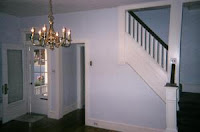 ay to start.
To go on, this house needed a little bit of work to make it beautiful cosmetically, so, we spent the next almost 10 years removing wallpaper, spackling (lots of horse-hair plaster walls), sanding, painting, installing cabinets, flooring, lighting, landscaping, etc. Always, the first priority was the rental unit, so that we would have no vacancy, and a happy tenant. You know, with less than $600 payments per month, you could afford to buy building materials.
We bought our first investment in 1998, when we bought an almost 3000 sq. ft. 2-unit house to live in. It had a total of 8 bedrooms, 3-1/2 baths, and the rental unit was on 1/2 of the first floor only. Our total PITI payment was $1064 at that time, and the income from the rental apartment was $495 for a 2 bedroom 1st floor apartment. In all of the almost 10 years that we owned that house, we never had a vacancy. So, hence, our payments were less than $600.00 to live in a 6 bedroom house with 2-1/2 baths and a 2 car detached garage! I would seriously suggest to anyone wanting to get started in real estate investing, that you seriously look at purchasing a multi-unit. Do not even look at multi-units over 4 units, as they are considered commercial units and would require different financing. Now, living in the same building, or even on the same property with their tenants might not be for everyone, but for some people who would like inexpensive housing payments, so that they can invest in other areas, this would be a good w
 ay to start.
To go on, this house needed a little bit of work to make it beautiful cosmetically, so, we spent the next almost 10 years removing wallpaper, spackling (lots of horse-hair plaster walls), sanding, painting, installing cabinets, flooring, lighting, landscaping, etc. Always, the first priority was the rental unit, so that we would have no vacancy, and a happy tenant. You know, with less than $600 payments per month, you could afford to buy building materials.
Subscribe to:
Posts (Atom)


